

Hydraulic units on a europallet
Tray layout for hydraulic control units in KC twinsheet trays on a 1200 × 800 europallet, as part of the returnable system for an e-transmission plant.
Six services, one engineer who follows your project through. Most customers start with one problem, such as damage, rust, a new part or a PPWR question, and we take it from there.
A new part, a new plant or packaging that keeps failing. We take it from requirements to production launch in seven steps, with prototypes and tests on your own parts before anything goes into series.
From the first visit to series production, for one part or packaging type. A full plant takes longer.
Tray layout for hydraulic control units in KC twinsheet trays on a 1200 × 800 europallet, as part of the returnable system for an e-transmission plant.
Rust on arrival is not always a packaging problem. We look at the whole route, from washing and drying to storage and sea freight, and then specify the VCI, barrier film, desiccant or ESD protection that fits.
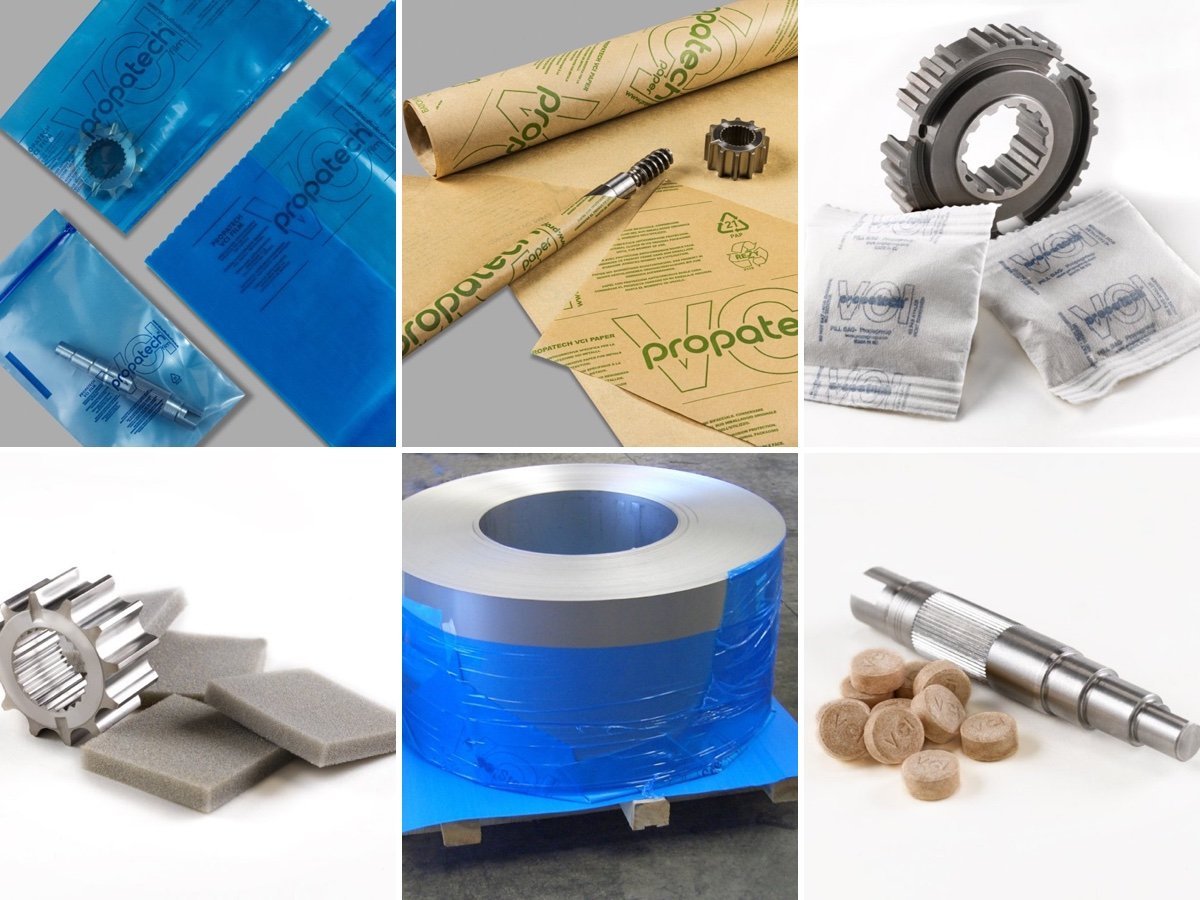
A climate-chamber test that simulates about 15 years of sea freight showed that residues from the washing process caused the corrosion. The advice was to fix the wash first, then choose the VCI and desiccant.
Returnable packaging only works when the loop is calculated properly. We compare one-way and returnable on cost, CO₂ and waste, size the pool, and set up rental or pooling where buying doesn't make sense.
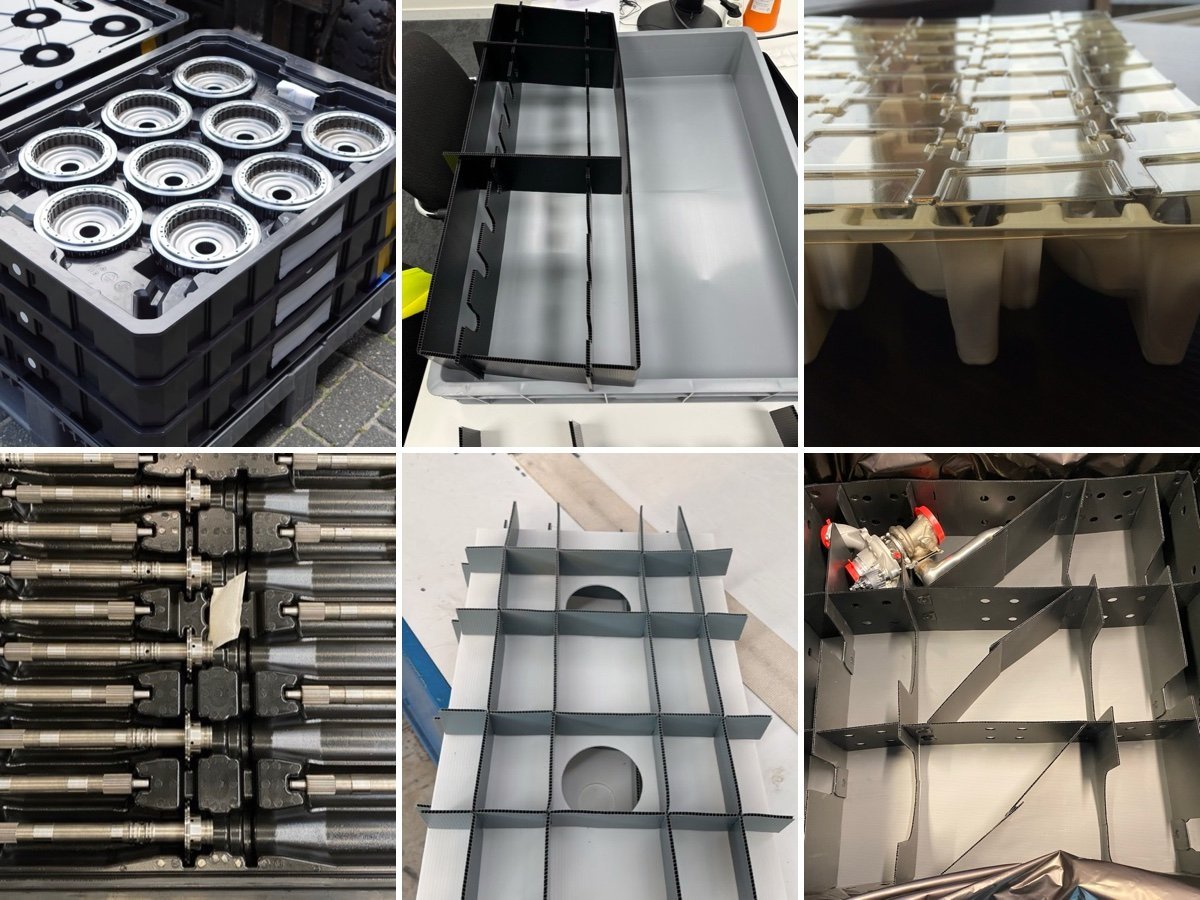
Damaged twinsheet trays were coming back from the loop. We traced most of the damage to handling at the receiving plants, ran repair trials so trays go back into circulation instead of the scrap bin, and put better handling at the top of the list.
Every packaging change is scored on the same criteria before and after, so the improvement is visible on the shop floor and in the budget.
Example only. Every project gets its own criteria and weighting.
A bearing flange that took up too many storage places. A new divider in five layers of 28 parts aims to raise pack density from 40 to 140 parts per pallet, with fewer pallets, trucks and storage places.
The EU Packaging and Packaging Waste Regulation (EU 2025/40) has applied since 12 August 2026. We turn it into a clear list of actions for your packaging, your suppliers and your customers.
Example only. Not a real supplier or a real result.
EPR registration and the formal sign-off of Declarations of Conformity are handled through our specialist compliance partner, with Proteqpack as your single point of contact.
As project lead since July 2026: packaging portfolio mapped, every European supplier asked for its Declaration of Conformity, a DoC register set up and each incoming declaration scored.
Once the design is approved, we bring in the maker that fits and follow up the deliveries, direct to your plant or drop-shipped from the producer. For Propagroup we work as sales agent in the Benelux.

VCI, barrier film and desiccants

Twinsheet and thermoforming

Cardboard, PP corrugated, honeycomb

Pallets, KLT and sleeve packs for rent
Series supply runs direct from the maker, drop-shipped to your plant, or from stock through Proteqpack Supplies, whichever fits your volumes and lead times.
Every project gets a fixed quote or a clear rate after the first visit or call. No surprises on the invoice.
A quote per packaging concept or project, with deliverables agreed up front.
For audits, tests, root-cause analysis and work that is hard to scope in advance.
Engineering or PPWR support on call, for teams that need a packaging specialist a few days a month.
When the packaging is supplied through Proteqpack, the engineering can be part of the price.
Yes. Most customers are in the Netherlands, Belgium and France, and projects have also covered plants and supply routes in Germany, Italy, Romania and Mexico, and suppliers in Europe, Turkey, China and Vietnam.
No. You can buy directly from the maker. If it suits you, we can also arrange series supply, direct, drop-shipped or from stock through Proteqpack Supplies.
That is agreed per project, in writing, before any tooling is ordered: who pays for the tool, who owns it and where it is kept.
Yes, that is the default. Prototypes are tried on your parts and your line, and transit, climate or dust tests are run through lab partners when the project needs them.
Since 12 August 2026 your packaging suppliers owe you a Declaration of Conformity, and importers of packed goods carry the EPR obligation for that packaging. More requirements follow, including reuse targets for transport packaging from 2030. We help you see which of these apply to you and in what order.
You upload one supplier Declaration of Conformity to our web tool. It checks completeness and the PPWR requirements and gives a green, amber or red result, with the points to follow up. There is no obligation.
Book a consult and send what you have: a drawing or photo of the part, the current packaging, volumes and the route. After a first call or visit you get a proposal with a fixed price or a clear rate.
Send a photo or drawing, the route and the storage time. You'll get an honest view of what to change, and what to leave as it is.